We acknowledge and pay respects to the Yugambeh people of the Gold Coast and all their descendants both past and present. We also acknowledge the many Aboriginal people from other regions as well as Torres Strait and South Sea Islander people who now live in the local area and have made an important contribution to the community.
Sustainability and Conservation Commitment
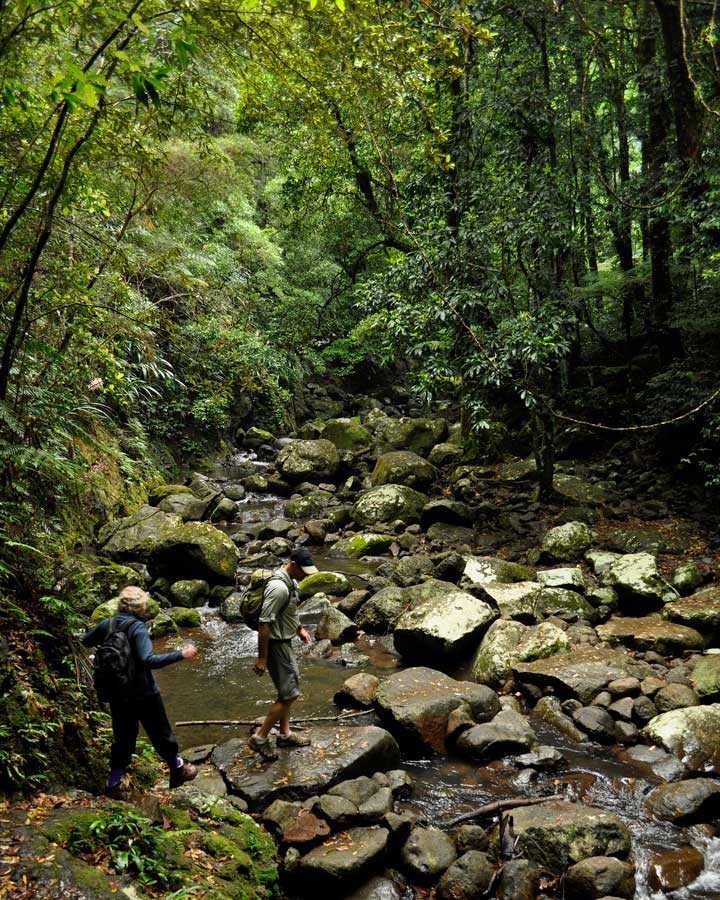
Binna Burra Lodge is deeply committed to the protection of native habitat, biodiversity, and landscape values, recognising these as fundamental to both the long-term sustainability of the property and the quality of the visitor experience. Situated on private land within the Lamington National Park and Scenic Rim region, the Lodge incorporates strong conservation principles into all land management and operational decisions.
A defined proportion of the property is actively managed for ecological and conservation purposes, ensuring the protection and enhancement of environmentally significant areas, wildlife habitat and ecological corridors. These areas are preserved as natural habitat to support native flora and fauna, maintain landscape integrity, and contribute to the broader ecological health of the surrounding World Heritage-listed environment. Management actions include limiting disturbance, protecting regenerating areas, controlling weeds and pests, minimising erosion, and avoiding development in sensitive locations.
This conservation approach is embedded within Binna Burra Lodge’s Environmental Management Framework and is supported by ongoing monitoring, operational controls, and continuous improvement. Where applicable, formal conservation agreements or declarations are maintained; otherwise, designated conservation zones across the property form the basis of ecological protection and stewardship.
Since its establishment in the 1930s, Binna Burra Lodge has demonstrated leadership in sustainable tourism, aligning its operations with the principles of the Global Sustainable Tourism Council (GSTC). The Lodge is committed to maximising positive environmental, cultural, social, and economic outcomes while minimising impacts. This includes benchmarking energy and water use, reducing waste, supporting the local community, and protecting cultural and natural heritage.
Through initiatives outlined in the Environmental Management Plan (EMP), Binna Burra Lodge continues to reduce environmental impacts while strengthening operational resilience. This long-standing commitment has been recognised through industry certifications and awards, including over 20 years of continuous ecotourism certification, reinforcing the Lodge’s position as a leader in sustainable and regenerative tourism.
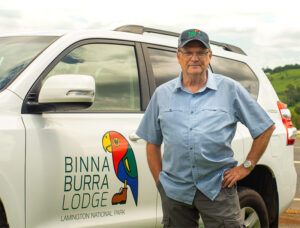
“Binna Burra Lodge has had what we now call a sustainable approach to tourism since its inception in 1933 when the concept of national parks was still new around the world.
Nowadays we also have the framework of world heritage values. This results in Binna Burra Lodge sharing responsibility for conservation of our cultural and natural heritage through sustainable tourism management.”

Conservation & Awareness
At Binna Burra Lodge, we are committed to delivering an inclusive and environmentally responsible eco-resort experience, balancing accessibility with the protection of our heritage-listed natural environment. While our unique location presents some inherent access challenges, we aim to make the lodge as welcoming as possible by providing clear pre-arrival information and encouraging guests to contact our team to discuss individual needs.
- Our operations are underpinned by strong conservation management practices that protect native habitats, biodiversity, and landscape values, alongside a commitment to reducing emissions and minimising environmental impact across all areas of the business.
- We prioritise the use of eco-friendly, biodegradable products and maintain strict controls over our water and sewerage treatment systems to ensure the health of surrounding ecosystems.
- Guest awareness forms an important part of this approach, with information provided to encourage responsible behaviours that support conservation outcomes.
As a certified eco-tourism operator, we adhere to recognised environmental standards and continuously review our practices to ensure they align with best practice sustainability principles while maintaining a safe, respectful, and accessible environment for all visitors.
Accessibility at Binna Burra Lodge
We are committed to making Binna Burra Lodge as welcoming and accessible as possible for all guests. Due to our unique location within a natural, heritage-listed landscape, some areas of the property present inherent challenges.
To help you plan your visit with confidence, we’ve outlined important information about access, facilities, and the support available to you. Please take a moment to review our Accessibility Statement below, and don’t hesitate to reach out to our team if you have any questions or specific requirements.

Reuse
We prioritise reclaimed and recycled materials wherever possible, giving new life to timber, stone and resources connected to this landscape.
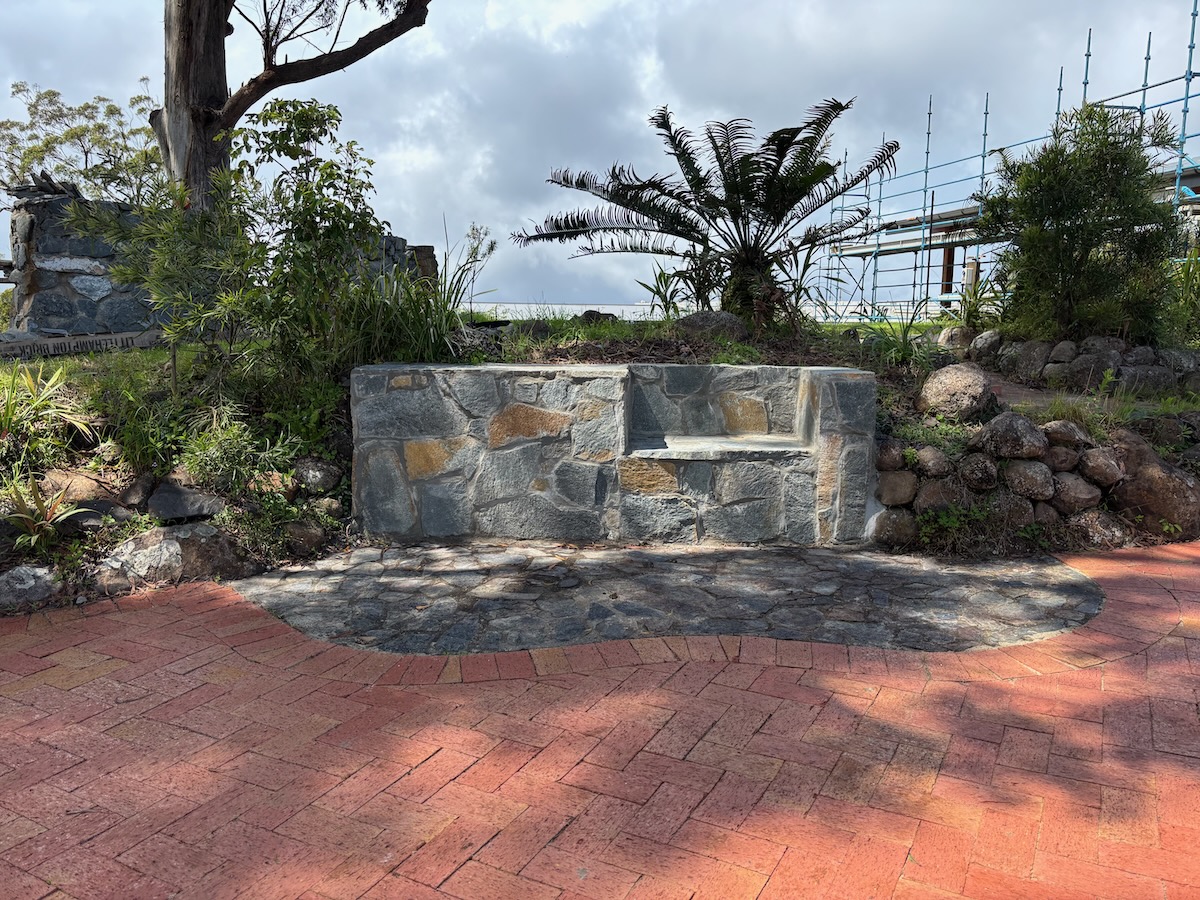
Repurpose
Existing structures, materials and food resources are thoughtfully adapted and reused, minimising waste while honouring the site’s history and natural cycles.
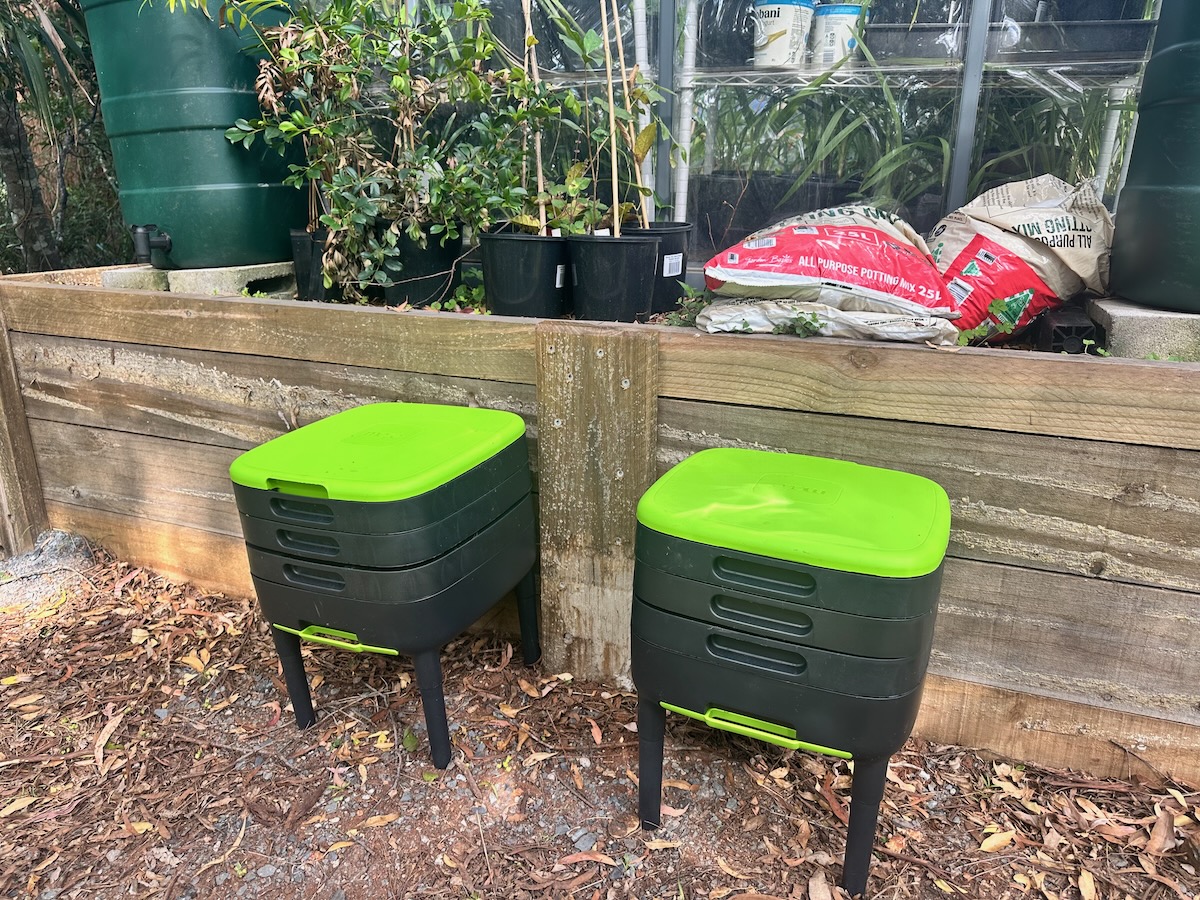
Respect
Every decision is guided by a deep respect for the land, its ecosystems and its cultural significance, ensuring we tread lightly.
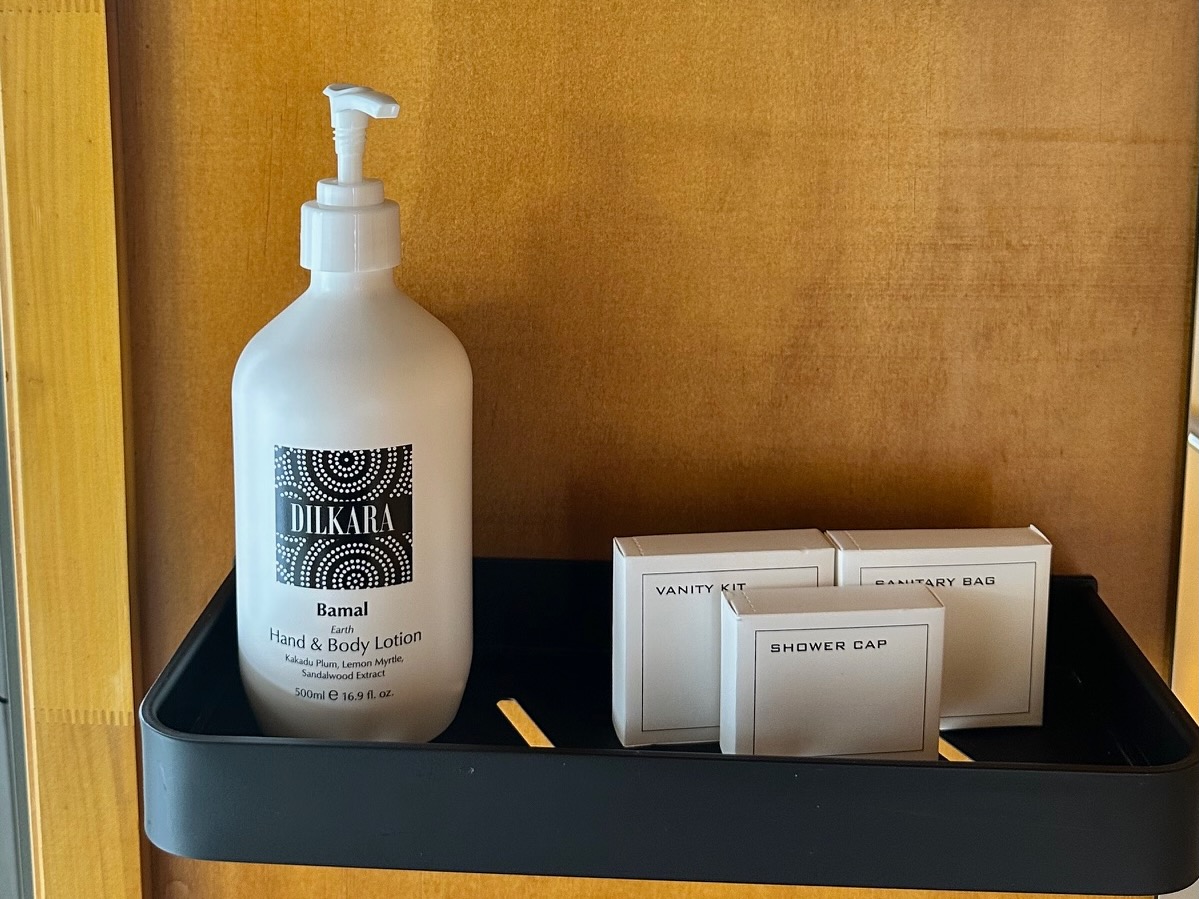
Experience
We create opportunities for guests to connect meaningfully with nature, fostering appreciation, awareness and a sense of stewardship.
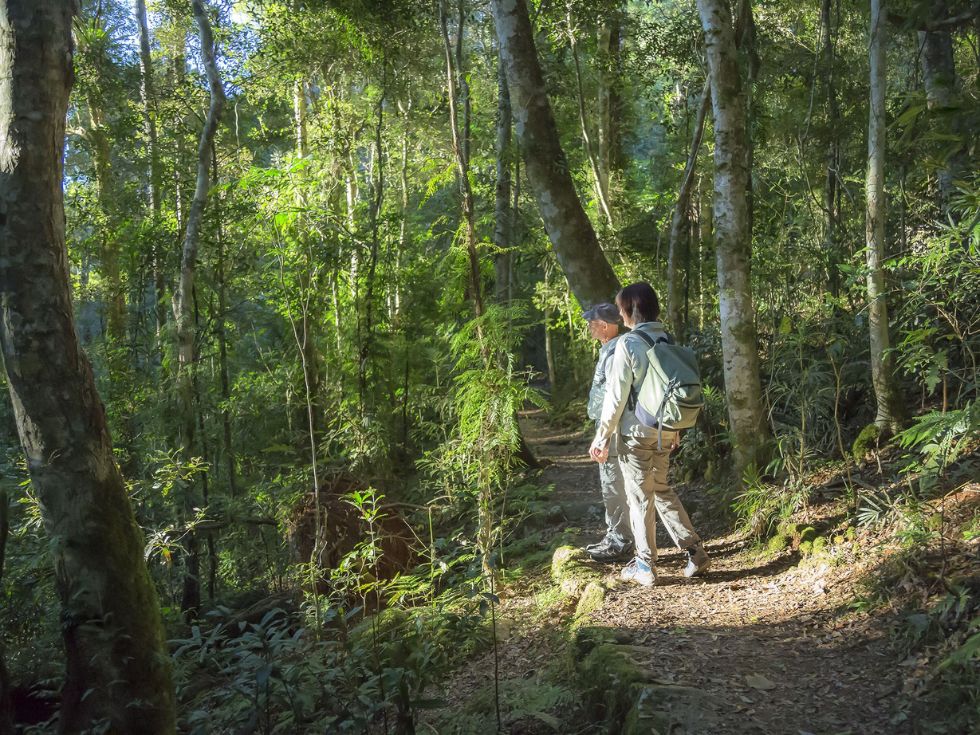
Design
Our design approach balances durability, sustainability and timelessness, building for today while ensuring the lodge endures for generations to come.
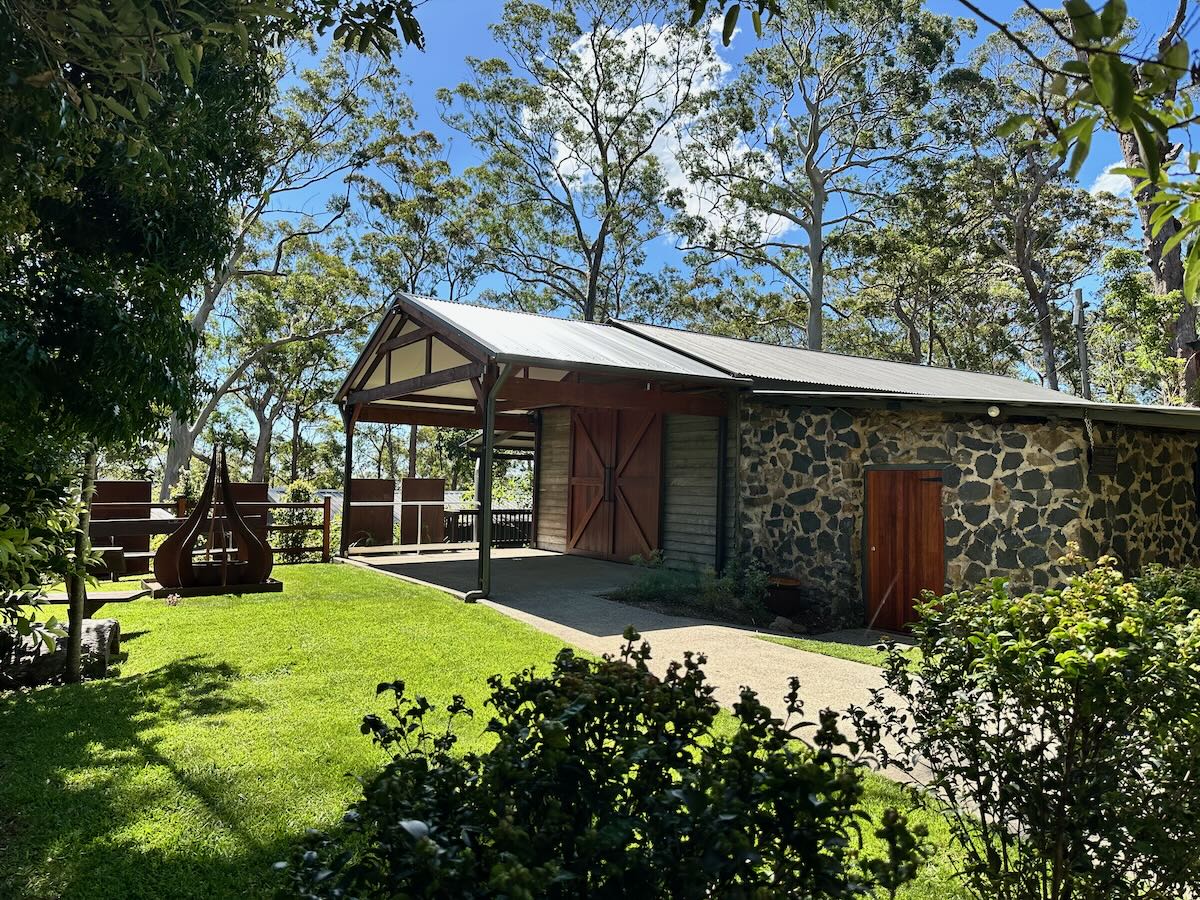
Acknowledging the earliest inhabitants at Binna Burra
A statement of information and policy endorsed by the Board of Directors, Binna Burra Lodge Limited, 18 December 2017.
‘Lamington National Park’s earliest human inhabitants were an Aboriginal kinship group, the Yugambeh who lived in this area, carefully managing and using its rich natural resources. Known as ‘Woonoongoora’ to the Yugambeh, the mountains are sacred and spiritual, places to be nurtured and respected.’
(Queensland Government, Department of National Parks, Sport and Racing)[1]
As a business that operates within a World Heritage designated natural environment, Binna Burra Lodge Limited’s vision ‘To be a meaningful connection to nature and heritage’ is delivered with the identification, protection, conservation, presentation and transmission to future generations of the cultural and natural heritage of our location.
We acknowledge and respect that the land upon which Binna Burra is located was used by traditional ‘first nations’ people of this mountain area.
While some people may see Acknowledgement and Welcome to Country as a recent practice invented for the sake of political correctness, or an empty token gesture, Wurundjeri Elder, Joy Murphy Wandin, describes it as “a very important way of giving Aboriginal people back their place in society, and an opportunity for us to say, ‘We are real, we are here, and today we welcome you to our land’…It’s paying respect, in a formal sense, and following traditional custom in a symbolic way.” [1]
References
[1] http://www.australianstogether.org.au/stories/detail/welcome-to-country
[1] https://www.npsr.qld.gov.au/parks/lamington/culture.html

Lamington Natural History Association (LNHA)
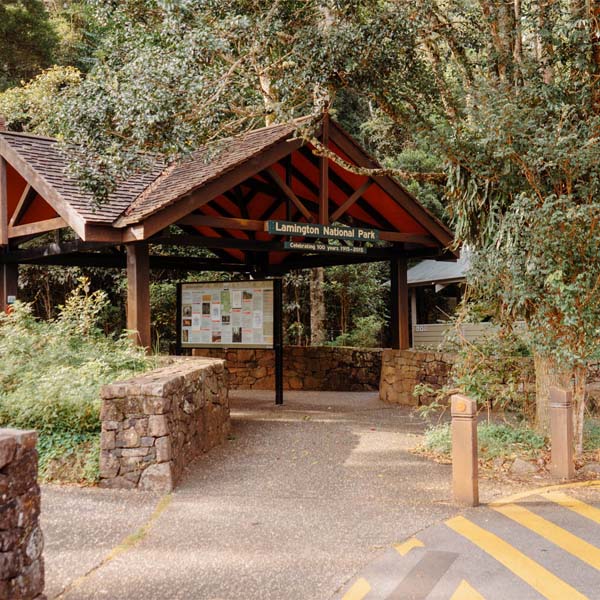
In 1975 the Lamington Natural History Association (LNHA) was formed, in association with Binna Burra Mountain Lodge, O’Reilly’s Rainforest Guesthouse and the Queensland National Parks and Wildlife Service.
LNHA was based on a concept which was common in the USA in the early 1970s, but was the first of its type in Australia. One of the Association’s early major projects was the establishment of an environmental study centre and headquarters on the Binna Burra property by renovating the timber cabin which Arthur Groom had built for himself and his wife in 1935. Opened in 1976, the centre contained an office, class-room, and dormitory accommodation for children taking part in educational camps (Stubbs & Specht, 2005).
The aim of LNHA is, to encourage an understanding and appreciation of the environment and national park values and provide interpretative information for visitors to Lamington National Park.
It does this by:
• Accredited members assisting the Queensland Parks and Wildlife Service (QPWS) by volunteering in the Binna Burra Information Centre on weekends and school holidays
• The LNHA provides interpretive information to visitors to Lamington National Park through, Books Track Guides and Brochures
• Activities for Members and guests on four weekends per year
• Guest speakers provide specialist talks on topics relating to Natural History, the environment and Lamington National Park
National Parks Association of Queensland (NPAQ)
 Back in 1930, the pioneering founders of Binna Burra, Romeo Lahey and Arthur Groom were also instrumental in the founding of the NPAQ.
It was out of the NPAQ and its increasingly popular camp-outs that the idea of establishing low-cost but comfortable accommodation which would allow a greater number of people to gain access to the peace, freedom and beauty of Queensland’s national parks emerged, and Binna Burra was established in 1933. The association continues to promote the preservation, expansion and good management of national parks and other forms of protected areas in Queensland.
‘During the early years of Binna Burra, (Romeo) Lahey also marked out and began construction of walking tracks within Lamington National Park, laying the foundation of the extensive network of tracks in the park today.’ (Stubbs & Specht, 2005)
NPAQ is an independent, not-for-profit, membership-based organization, and is the first conservation organisation in Queensland, and the longest running National Park Association in Australia.
Nowadays, Binna Burra still shares the objectives of NPAQ:
1) To preserve the National Parks and other protected areas of Queensland in their natural condition, to the greatest possible extent, and to endeavour to ensure the reservation and preservation of other areas considered to be suitable for protection;
2) To foster member and public interest in, enjoyment of, and respect for National Parks and nature conservation;
3) To promote the appropriate management of National Parks and other protected areas, and appropriate management of environmental factors which may affect existing and potential National Parks;
4) To promote effective legal and environmental protections in respect of National Parks and other protected areas, and to ensure the enforcement of provisions for their protection;
5) To promote appropriate and balanced measures for visitors to experience National Parks while conserving and protecting the natural environment.