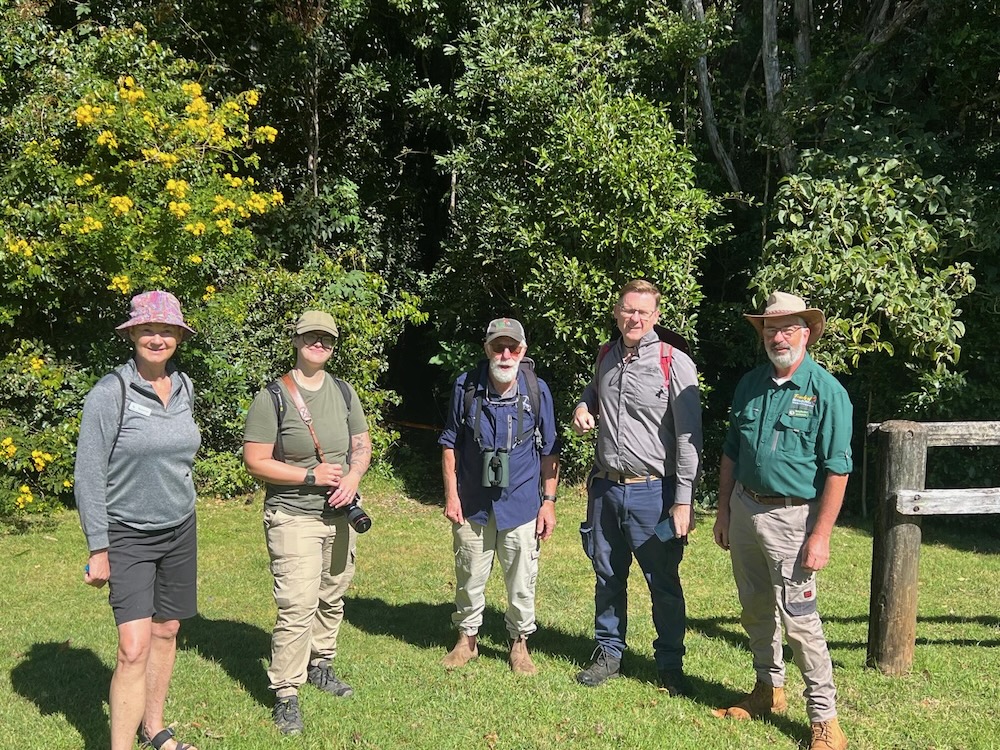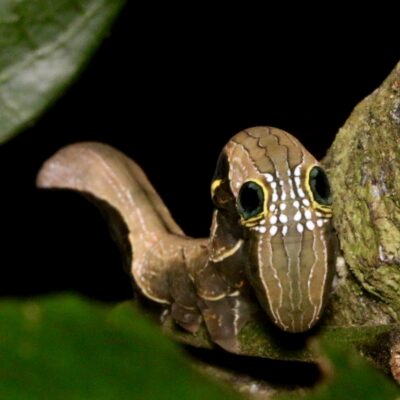
April 2026: ‘Guess what I saw? A larva of 𝘗𝘩𝘺𝘭𝘭𝘰𝘥𝘦𝘴 𝘪𝘮𝘱𝘦𝘳𝘪𝘢𝘭𝘪𝘴 𝘴𝘮𝘪𝘵𝘩𝘦𝘳𝘴𝘪!! Yesterday I visited Binna Burra with iNaturalist legend Greg Tasney on the search for 𝘊𝘢𝘳𝘳𝘰𝘯𝘪𝘢 𝘮𝘶𝘭𝘵𝘪𝘴𝘦𝘱𝘢𝘭𝘦𝘢, and Greg spotted a single larva!’ Aster Stevanovic, PhD Candidate, Griffith University.
𝘗. 𝘪. 𝘴𝘮𝘪𝘵𝘩𝘦𝘳𝘴𝘪, or the Southern Pink Underwing Moth (SPUM) is an endangered species found only in South East Queensland and North East of New South Wales in Australia.
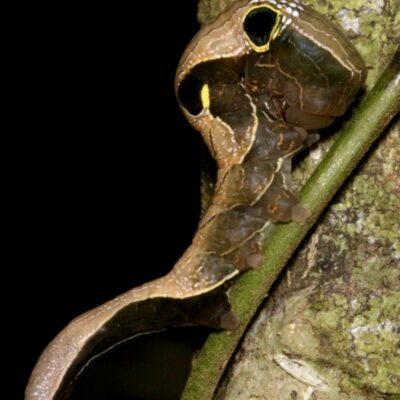
When not in their defensive pose adult moths resemble dead or dried leaves, with grey-brown forewings. The larval stages of this species have spectacular defensive mimicry and camouflage. When spooked, the little beans tuck their heads into their prolegs and rear up to mimic a creature with big eyes and teeth.
Its larvae rely exclusively on the Carronia multisepalea vine. It’s a native, woody, straggly vine in the Menispermaceae family found in subtropical rainforest understories of places such as the Binna Burra Cultural Landscape. It is known for its elbow-shaped, woody petiole and is critical as the sole food source for the endangered Southern Pink Underwing Moth larvae.
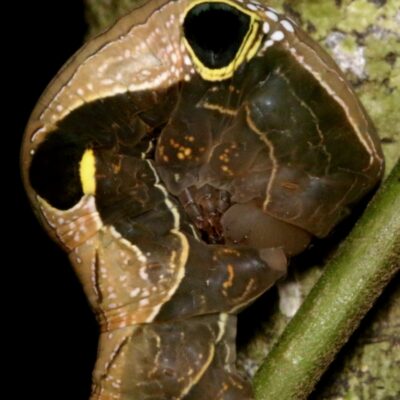
Conservation Status: Endangered under the Australian Environment Protection and Biodiversity Conservation Act (EPBC Act).
The discoverers: On Wednesday, 01 April 2026, Greg Tasney from the Environmental Planning and Biodiversity section of the Scenic Rim Regional Council visited Binna Burra and spotted the rare SPUM. He was accompanied by a very excited onlooker, Aster Stevanovic, Griffith University PhD candidate and Field/Research Assistant in the School of Environment and Science. They were joined by ecologist Barry Davies, the President of the Lamington Natural History Association (LNHA), Suzanne Noakes (LNHA Secretary), Jankees Van Der Have (Binna Burra Foundation + Friends of Binna Burra) and Binna Burra Lodge Chairperson, Steve Noakes.