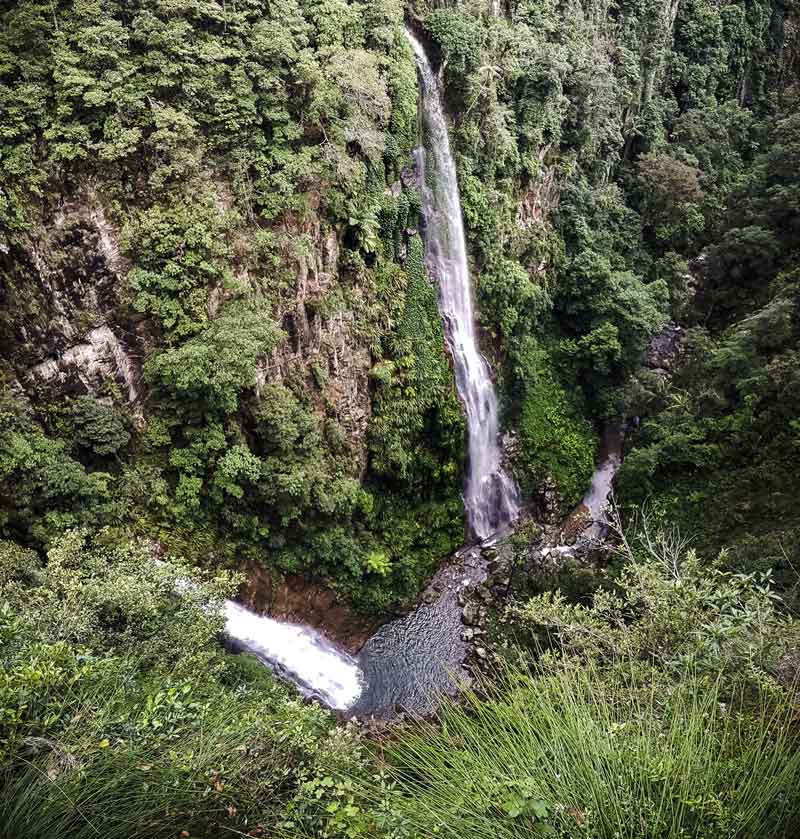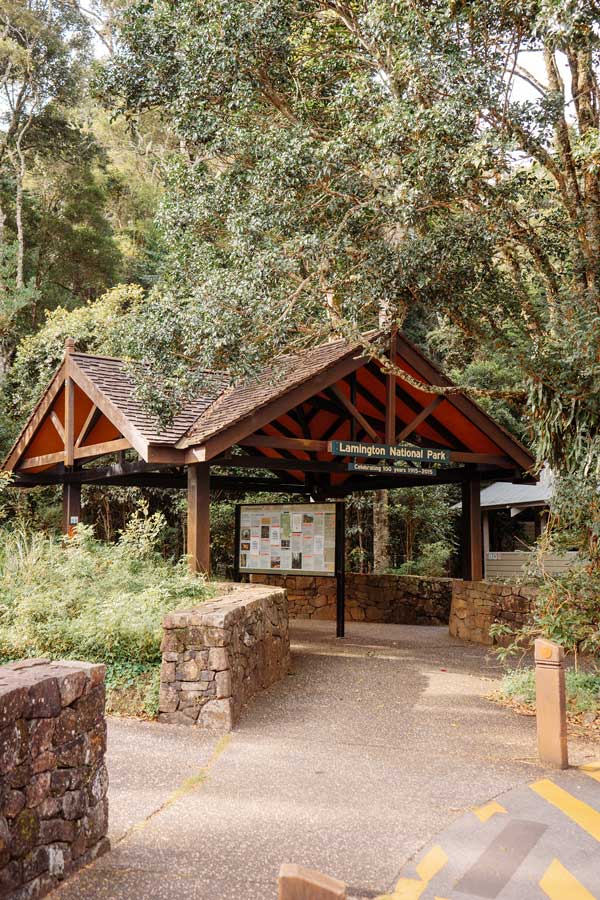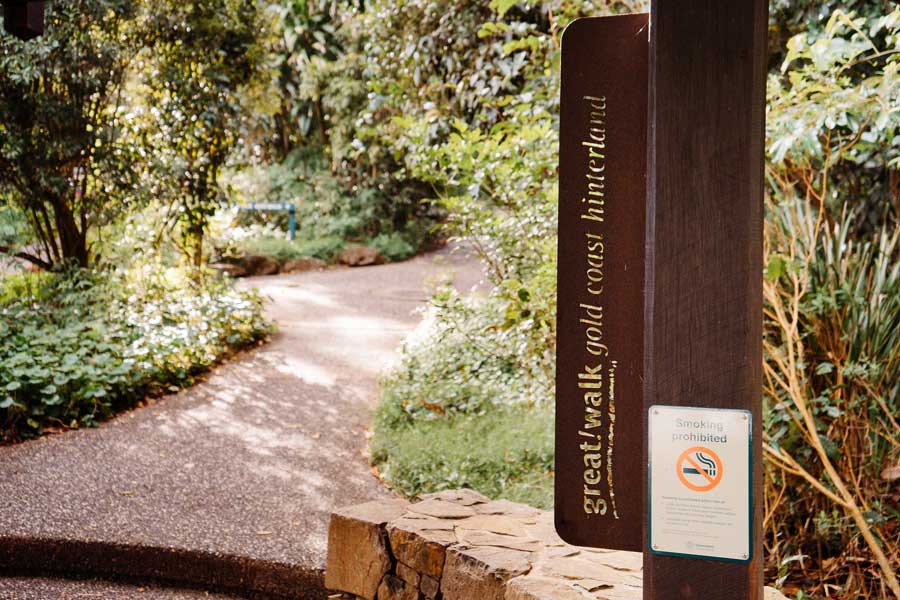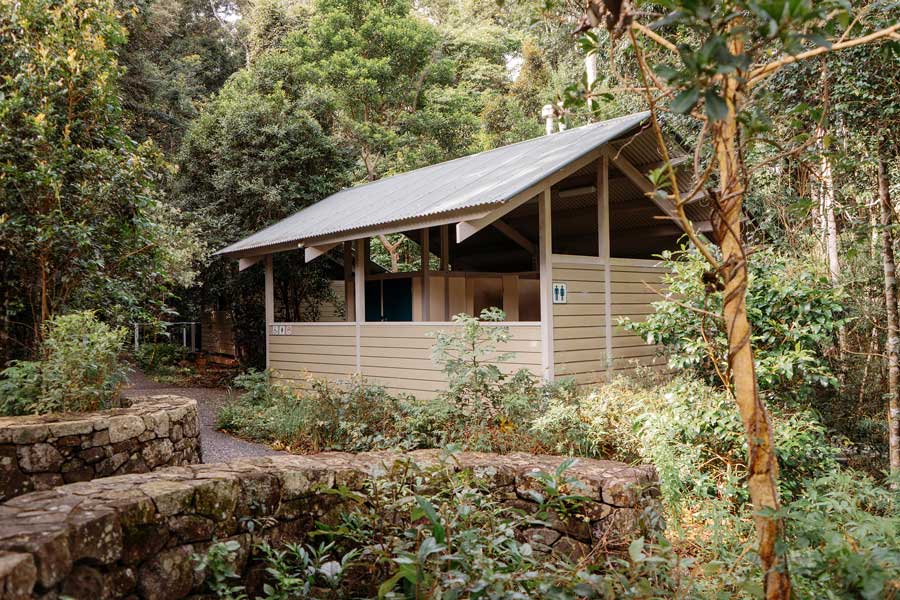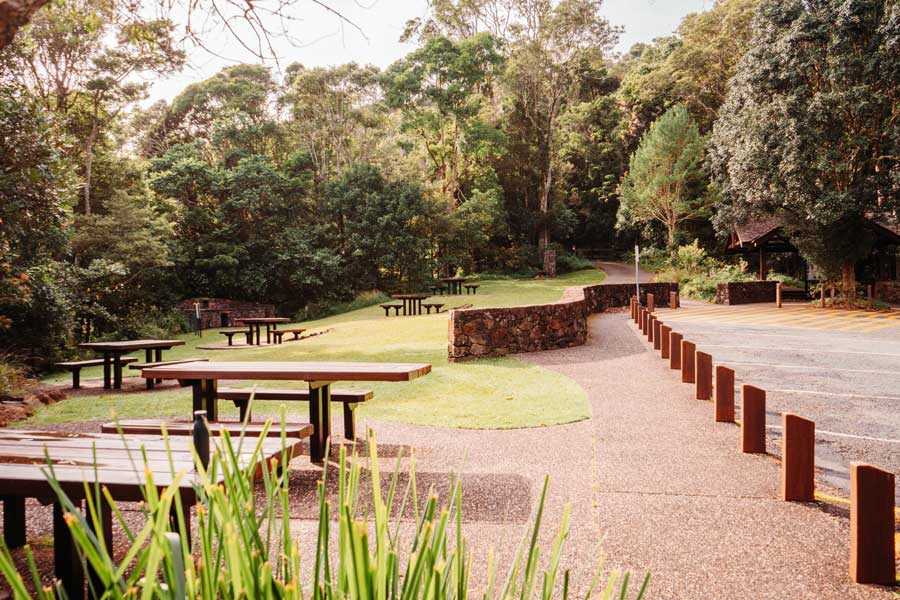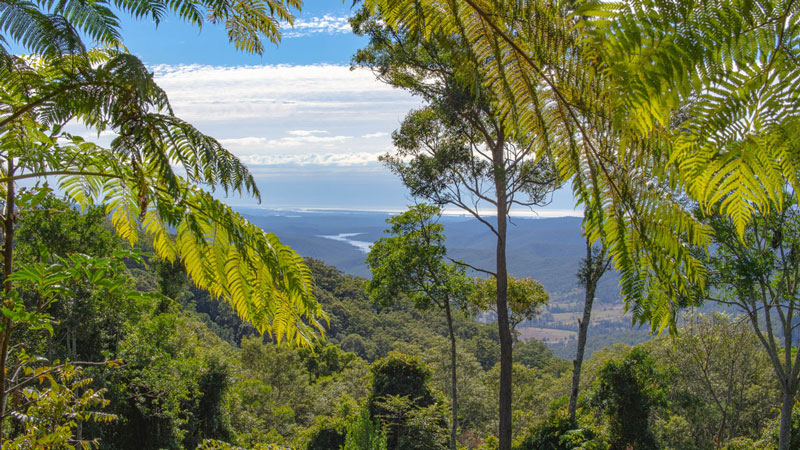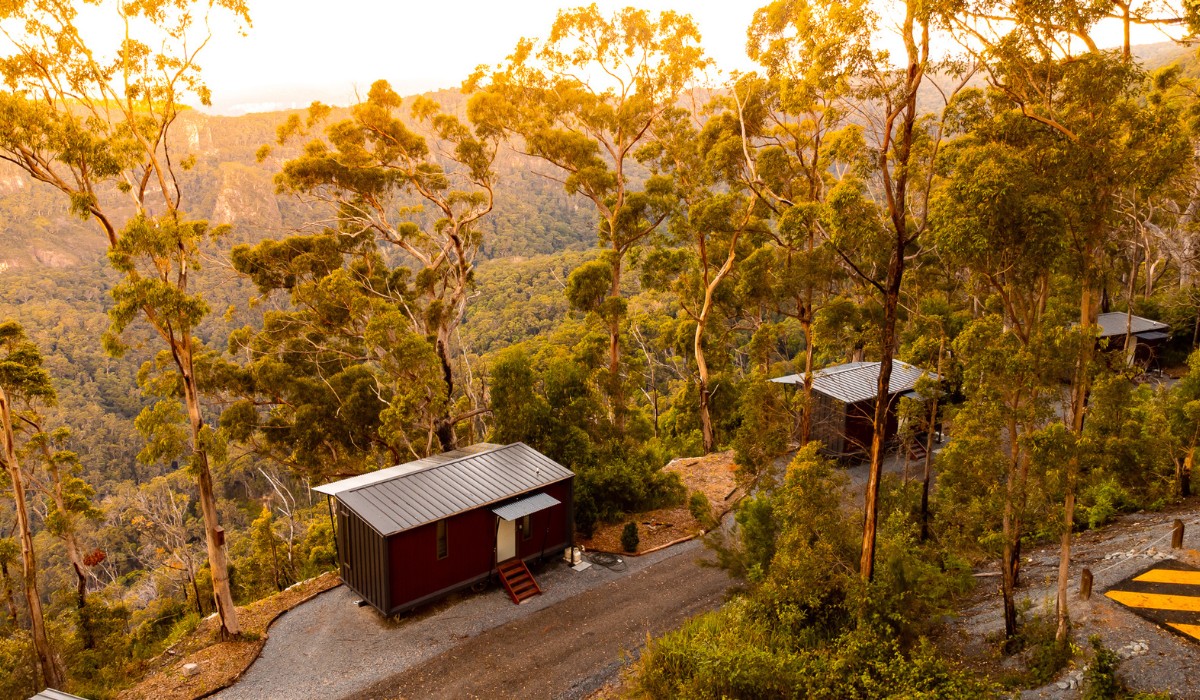
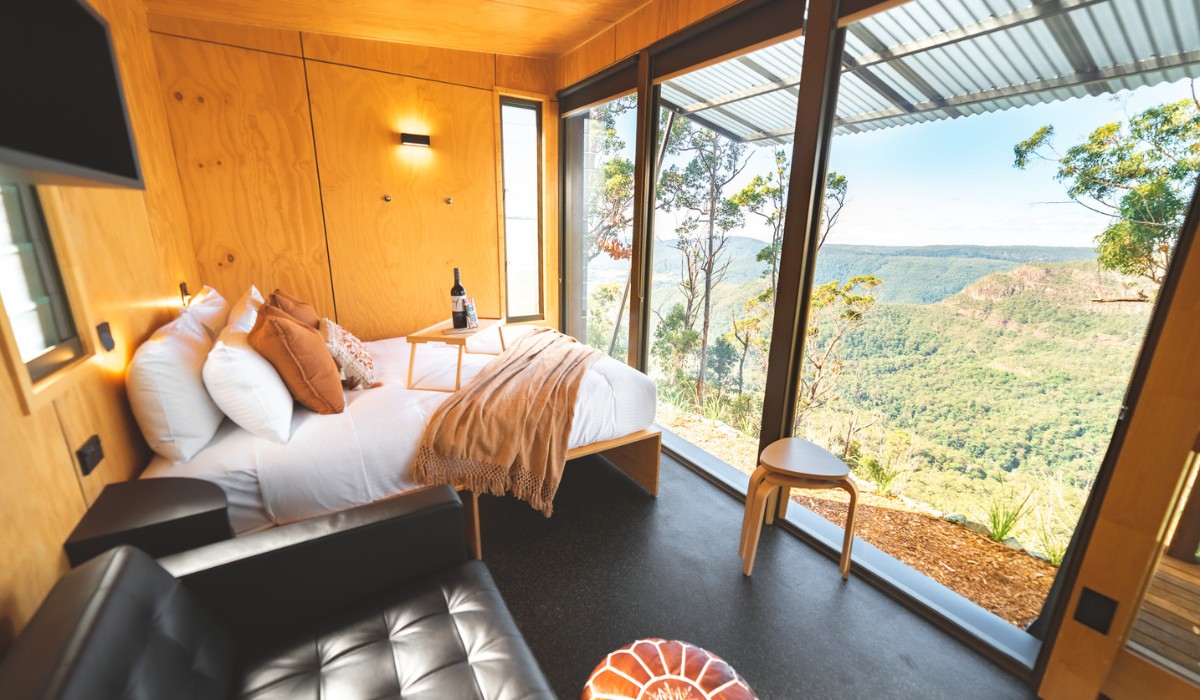
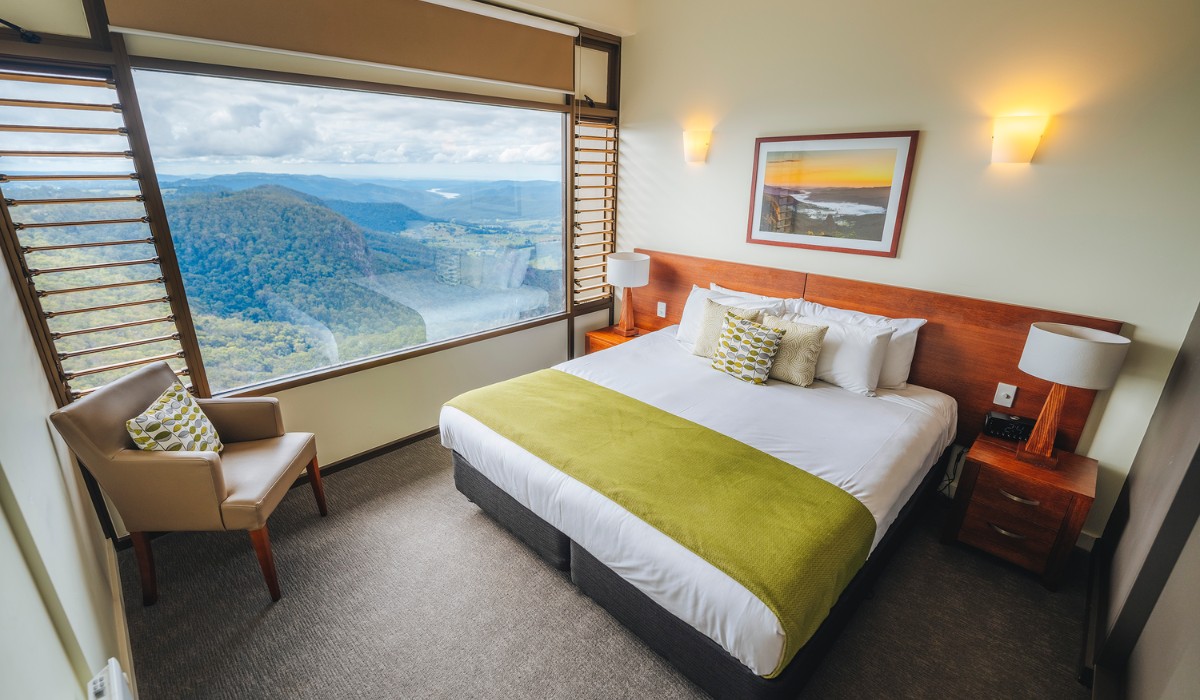
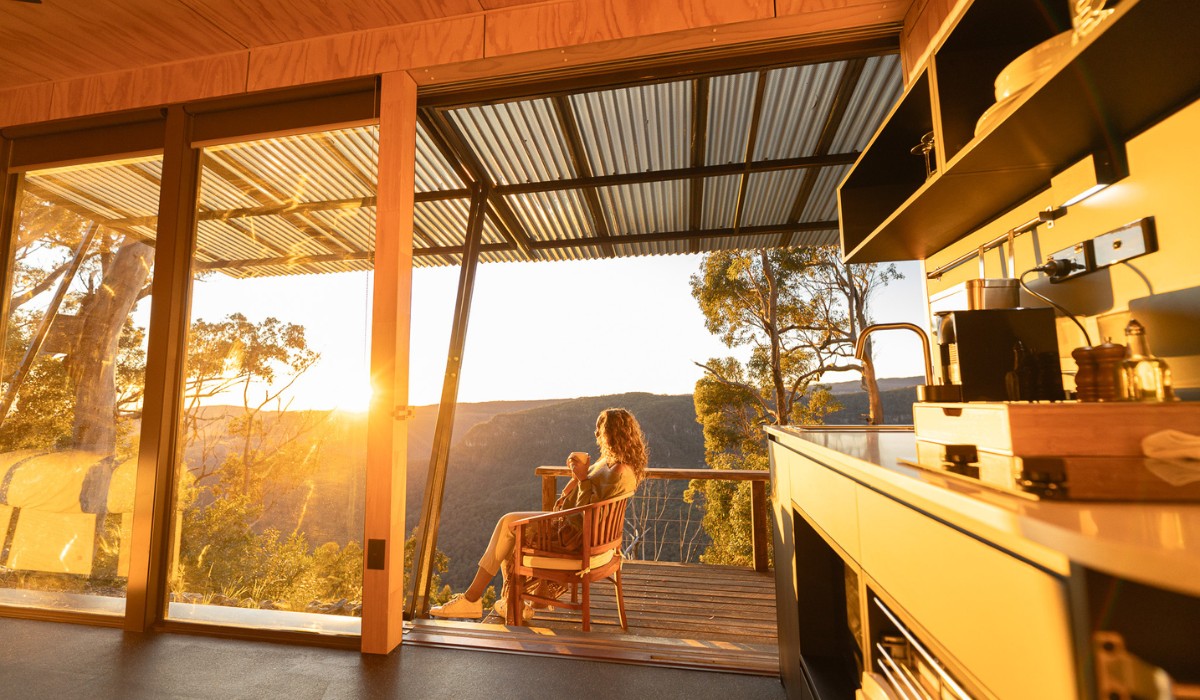
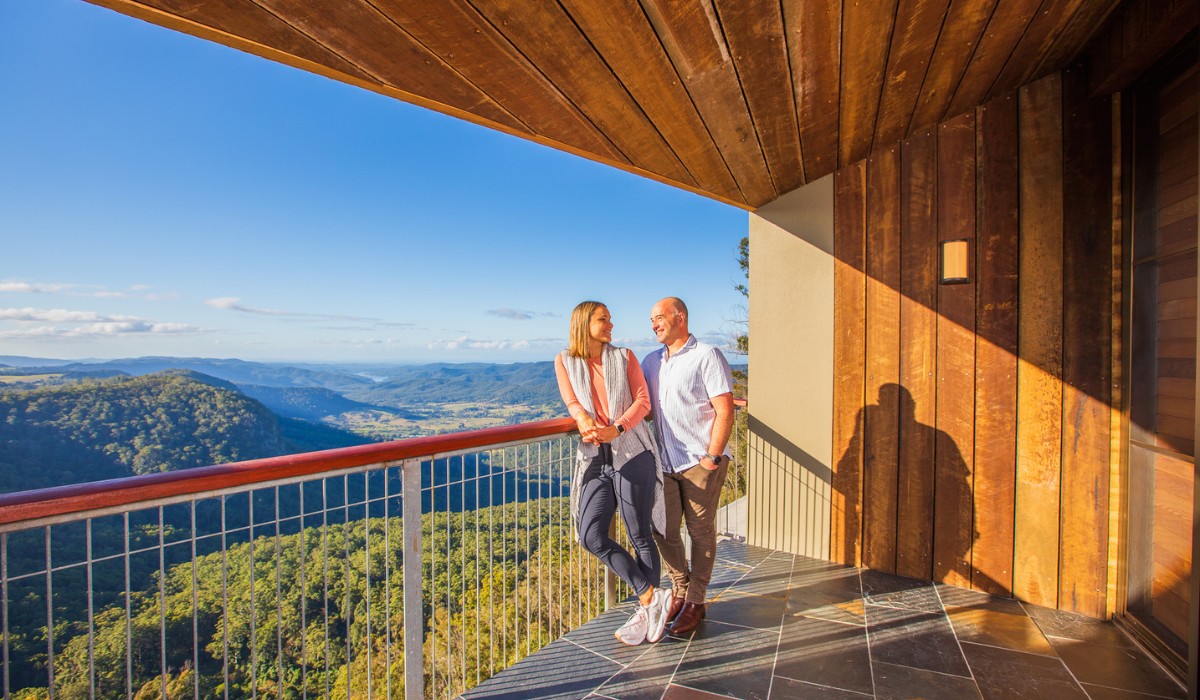
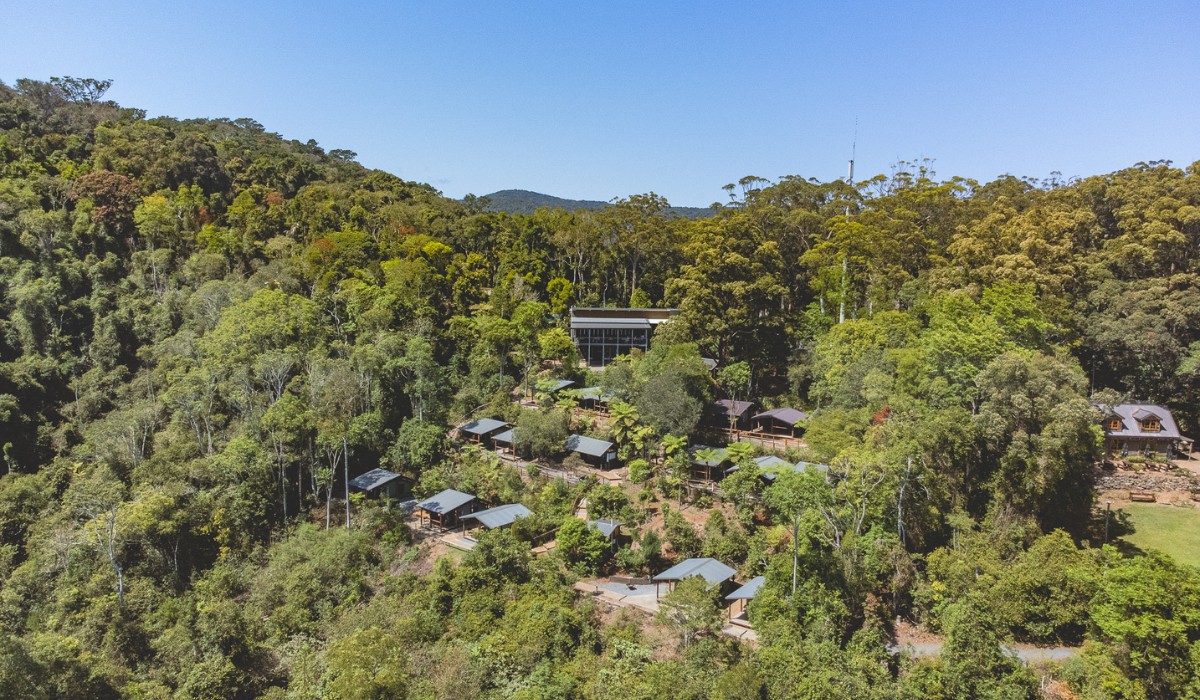

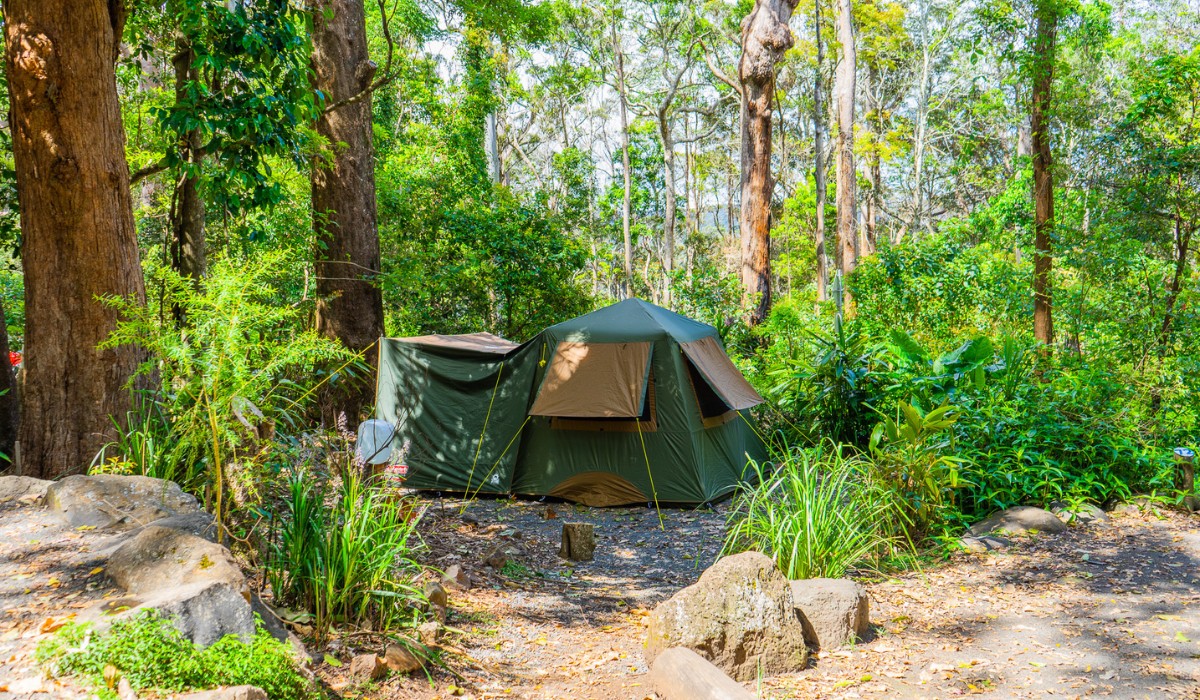
The dramatic landscape of radiating ridges and cliff-lined valleys results from 20 million years of erosion to a huge volcanic mountain, the remnant core of which is known as Mount Warning. During climatic fluctuations and sea-level changes over the millennia, the mountain has remained a refuge for the various populations of Australia's Gondwana derived flora and fauna.
Because the central core of sub-tropical rainforest is bordered by a variety of other typical Australian vegetation types, the diversity of plants and animals is remarkable. The National Park boasts over 900 species of vascular plants and over 120 bird species.
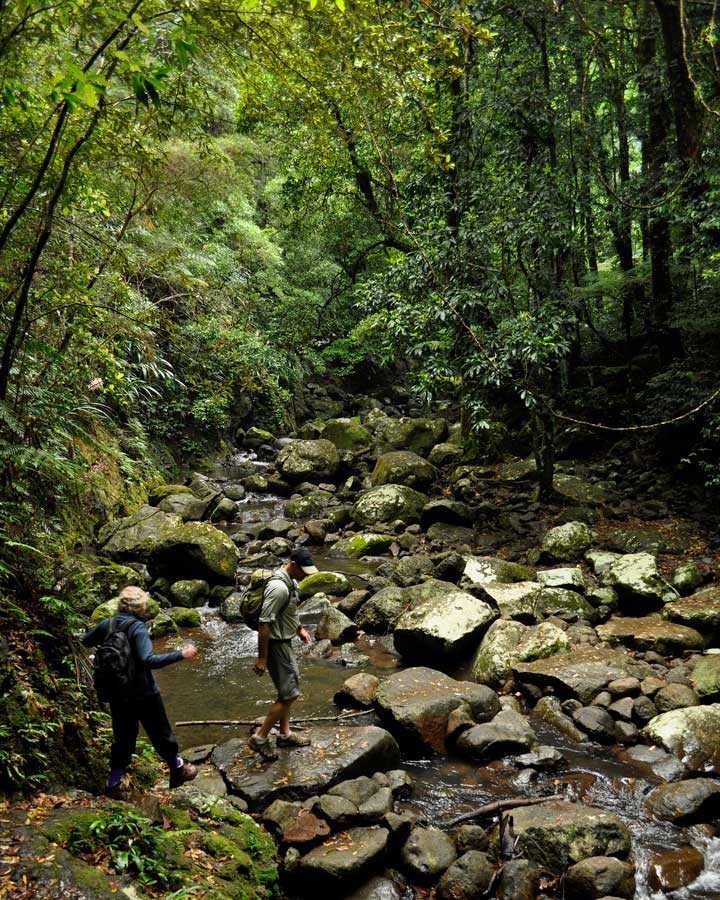
A system of well formed and gently graded trails allows the visitor easy access to the majority of the parks features - ranging from palm filled valleys with waterfalls and crystal clear rivers to mist covered mountain tops (1100 metres) clothed in cool-temperate rainforests dominated by Antarctic Beech trees. In between you can visit the spectacular eroded cliffs, enjoy wonderful vistas or stroll through the wildflowers in shrubby heath-lands.
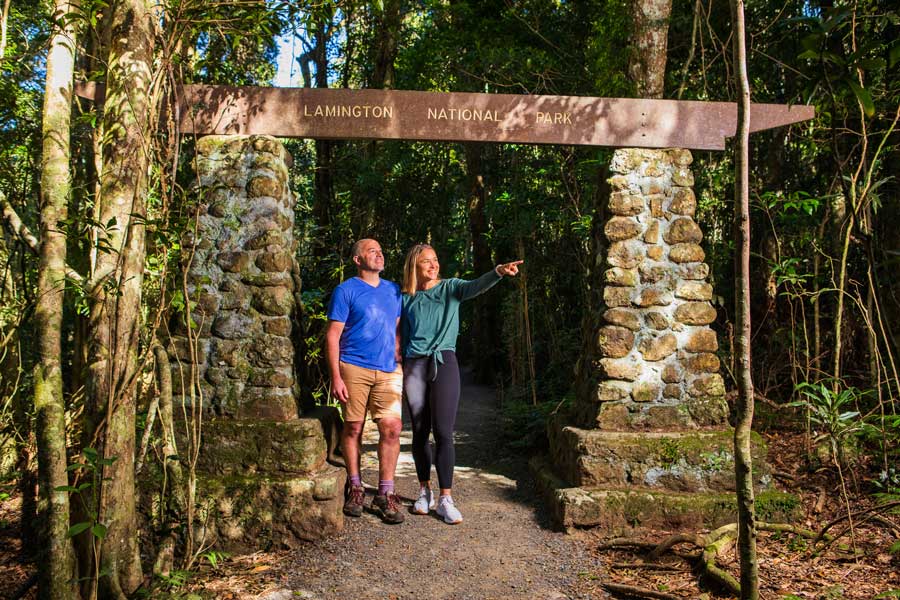
Good signage exists and carefully prepared maps and self-guiding brochures are available from the Lodge. When combined with the safe environment and equitable sub-tropical climate they make Lamington National Park the most user-friendly rainforest wilderness in the world- all a mere 90 minutes drive from Brisbane International Airport.
The History of Lamington National Park
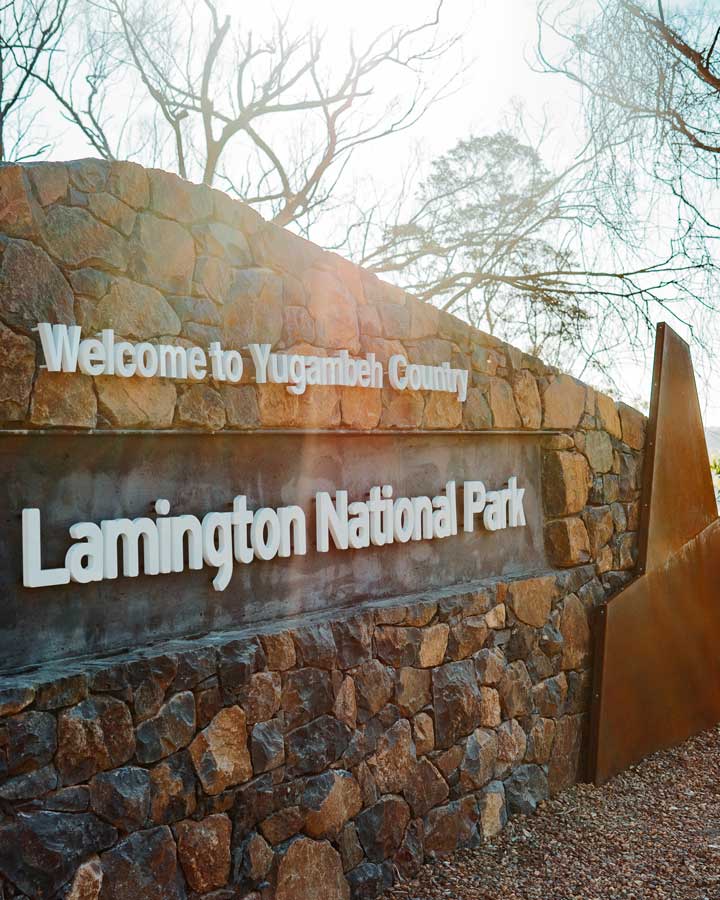
Lamington National Park is 20,600 hectares in size and stretches from the southern side of the Scenic Rim to the crest of the McPherson Range that forms the border between Queensland and New South Wales to the south.
Lamington National Park comprises of two sections: Binna Burra and Green Mountains.
From 10,000 years ago aboriginal groups, the Mingunburri, Wangerriburri and Bundjalung people, lived in and visited Lamington National Park. Visitors can explore the 'caves circuit' from Binna Burra.. The main Kweebani Cave has a sloping shelf of volcanic ash. The aboriginal name means to cook and it stems from the fact that when Romeo Lahey (the first European to see these caves) explored them, he found cooked shells of the Lamington blue crayfish in the ashes of old fires high up on the sloping floor of the cave.
In the early years of European settlement in the area, the dense forests were used for their timber, and many trees were harvested during this time. However, when in 1872 when the world's very first national park was established in the United States, Robert Collins, a local pastoralist, was determined to preserve the remaining areas of the McPherson Ranges. Romeo Lahey, a saw-miller and engineer from Canungra joined Collins in his efforts, and by 1915 the area that we now know as Lamington National Park was declared.
Romeo Lahey and Arthur Groom went on to establish the Binna Burra Guest House in the 1930s, and by 1994, Lamington National Park was listed as a World Heritage Area.
The Flora and Fauna of Lamington National Park
There are literally 100's of flowering plants within Lamington National Park including trees, shrubs, vines and creepers, small herbs and grasses, orchids, lilies and related species and other specialised plants such as the parasites like mistletoe. Some of the flora to be found includes: tree waratah, white heath, flame kurrajong, stinging tree, antarctic beech tree, ironbark orchid, king orchid, red cedar, wild tobacco, sundew, and grass tree.
There is a myriad of fauna to be found around Binna Burra Mountain Lodge and its surrounds in the Lamington National Park.
Most of the Park's reptiles and amphibians are best seen during the summer. The majority of reptiles are active during the warmer part of the day, although some species are nocturnal. Amphibians (frogs and toads) are active day or night under certain circumstances and can be heard calling from either water areas or special habitats such as the beech forest.
Some of the other bird species commonly found around Binna Burra include: the bee-eater, white browed scrub wren, king parrot, kookaburra, rainbow lorikeet, crimson rosella, and many more. There are also a lot of beautiful bird species to be found within Lamington National Park. Some of the other bird species commonly found around Binna Burra include: the bee-eater, king parrot, kookabuura, rainbow lorikeet, crimson rosella, and many more.
Most of the Park's mammals are marsupials (pouched mammals. These mammals are nocturnal, highly active and frequently canopy feeders. Pademelons can be found in large numbers on the grassed areas around the Lodge in the evening.
Other mammals found in the park are: echidnas, quolls, koalas, possums, and wallabies. A number of invertebrates can also be found within the Lodge grounds and immediate surroundings, or by walking through Lamington National Park. The spiny blue crayfish, butterflies, cicadas, dragonflies, mites, spiders, and giant worms and others.
Bird Watching
Situated on the eastern side of Lamington National Park in Southern Queensland, Binna Burra provides an opportunity to see a diverse range of bird species in rainforest and open forest within easy walking distance on graded tracks in close proximity to the Lodge.
More than 150 bird species feature on the Binna Burra bird list. Rainforest specialists include the Noisy Pitta, Albert's Lyrebird, Regent Bowerbird, Pale Yellow Robin, Rose Robin, Rufous Scrub-bird, Paradise Riflebird, Wompoo and Rose-crowned Fruit-Dove and Topknot Pigeons. In the spring and summer migrant visitors include Spectacled, Black-faced and White-eared Monarchs, a variety of species of Cuckoos and many more.
Seasonal Birding Breaks are held and more information on these is available on the events page.
For more information please email: This e-mail address is being protected from spambots. You need JavaScript enabled to view it